State and non-state actors recurrently aim to destroy, remove, or erase certain groups within their territories—with devastating human consequences. Since the beginning of the twentieth century, tens of millions of civilians have been killed in episodes of genocide and mass killing, and tens of millions more have been expelled from their homes.
In a new special issue that Meghan Garrity and I co-edited for the Journal of Ethnic and Migration Studies, titled The Logics of Eliminationist Politics, we bring together scholars from across subfields to examine the causes, rhetoric, tactics, and consequences of eliminationist policies across diverse cases and contexts (see Table of Contents below) .
The issue opens with an introductory article I co-authored with Meghan, titled “Eliminationist Politics: An Analytical Framework”. In it, we take stock of how scholars across the social sciences conceptualize and operationalize eliminationist policies—defined as “deliberate actions by state or non-state actors aimed at destroying, removing, or erasing groups based on salient identity categories”.
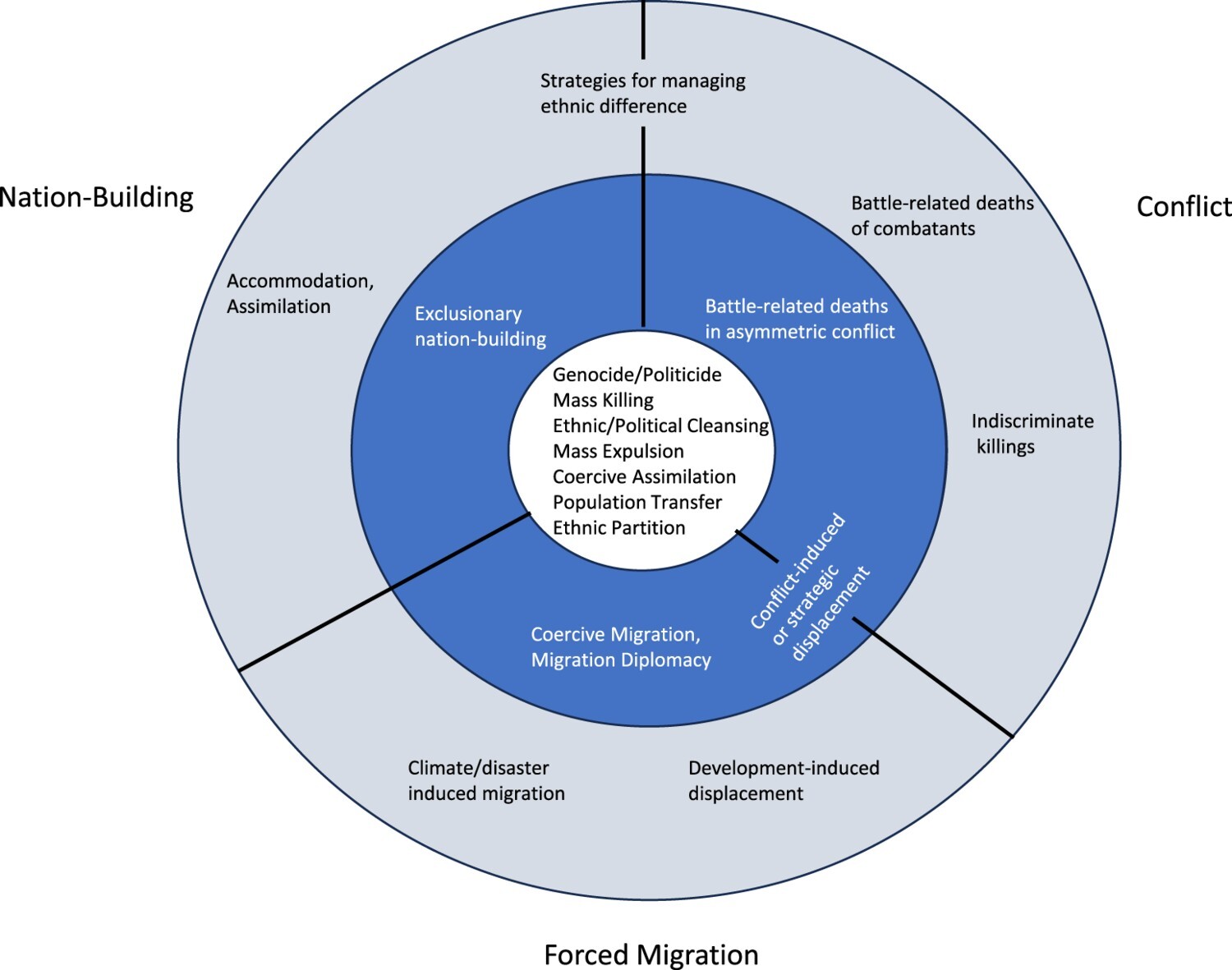
While existing research has generated major theoretical insights, we argue that persistent variation in concepts and measures carries important implications for theory-building, empirical inference, and ultimately for understanding prevention. To illustrate what is at stake, we revisit a paradigmatic case—the 1923 Greco-Turkish compulsory population exchange—and show how different analytical choices produce distinct causal narratives and claims to generalizability.
Together, these articles highlight the value of cross-disciplinary dialogue and lay the groundwork for a more integrated analytical framework for studying eliminationist politics.
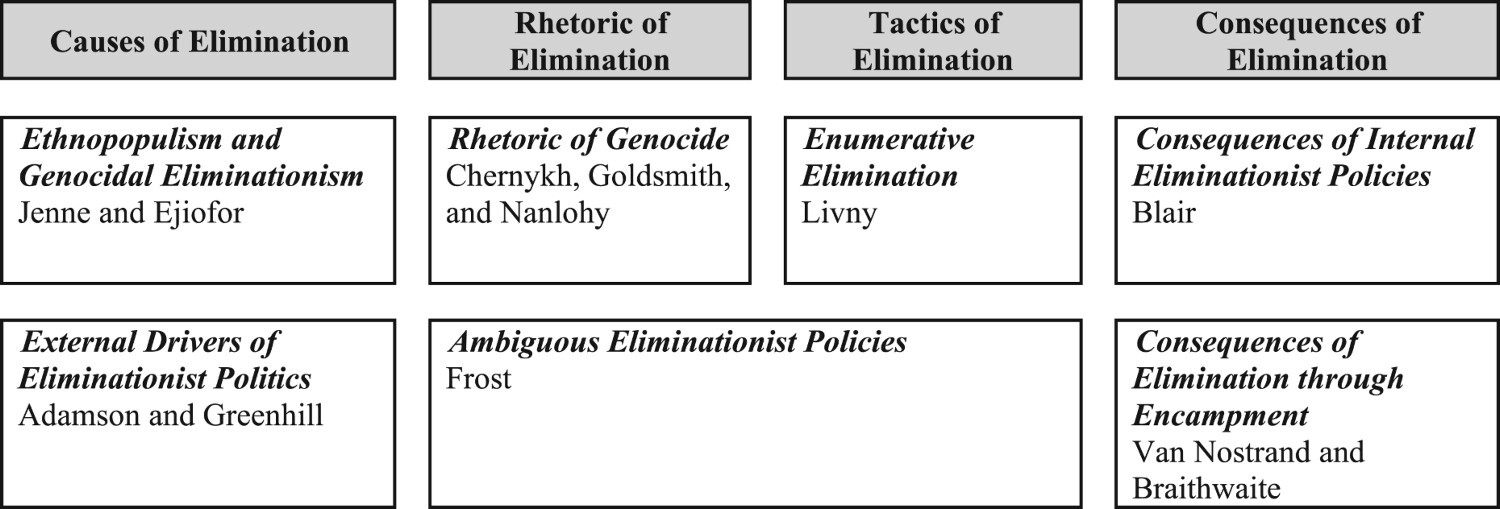
Table of Contents
Eliminationist politics: an analytical framework
by Meghan M. Garrity & Harris Mylonas
by Erin Jenne & Promise Frank Ejiofor
Organised forced migration and the external drivers of eliminationist politics
by Fiona B. Adamson & Kelly M. Greenhill
A special kind of hate? The rhetoric of genocide
by Svitlana Chernykh, Benjamin E. Goldsmith & Sascha Nanlohy
Don’t count me out: Erasure of ethnicity and ethnic groups from national censuses
by Avital Livny
Ambiguous elimination: Jordan’s denationalisation of West Bank Palestinians
by Lillian Frost
Dynamics of internal displacement and conflict in Somalia
by Christopher Blair
Race, railways, and the long-term legacy effects of concentration camps: Evidence from South Africa
by Rachel Van Nostrand & Alex Braithwaite
 Harris Mylonas
Leave a comment